
How to black out
a hotel room
Sleeping in starts with
keeping the sun out
How to black out a hotel room
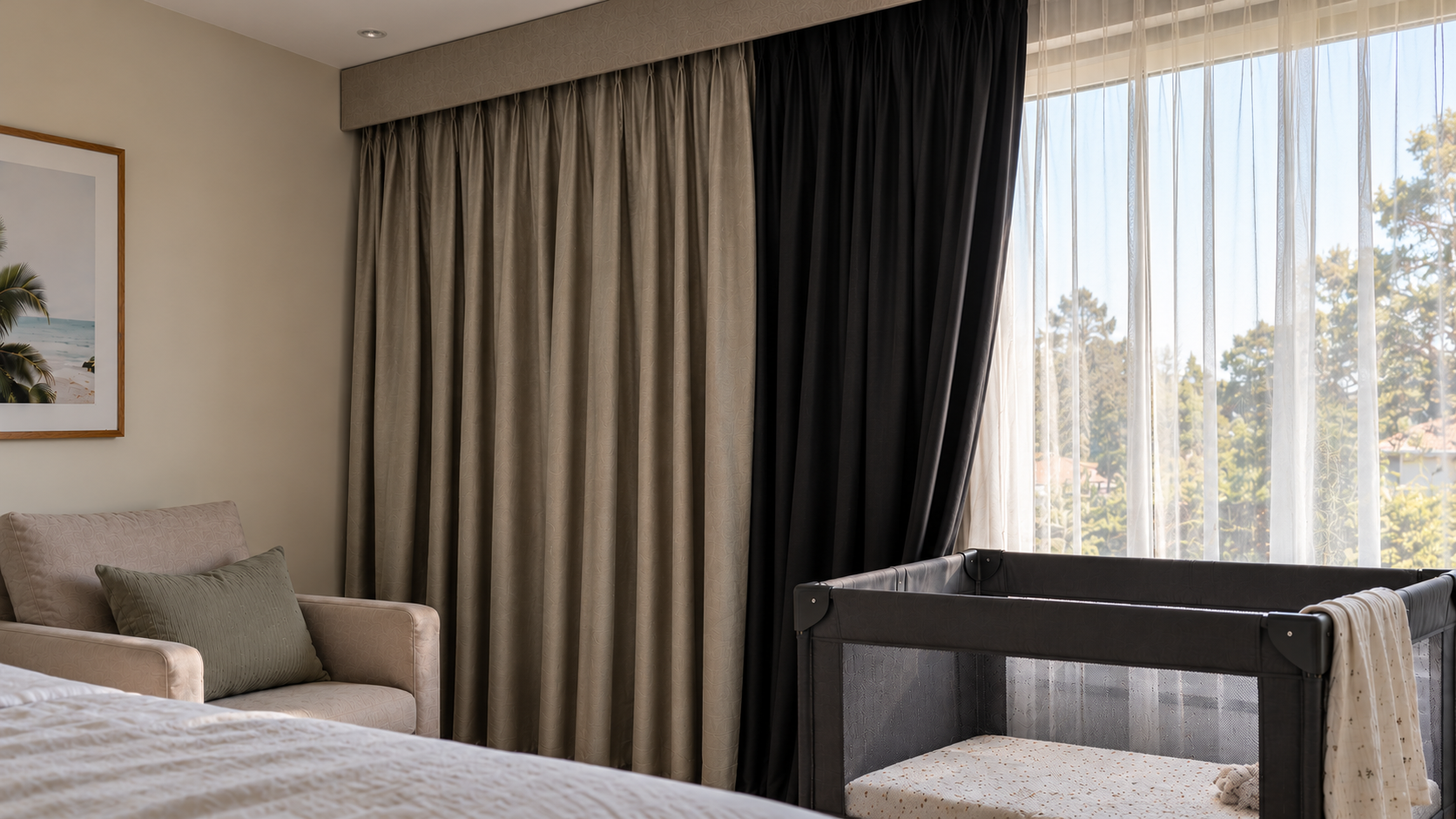
A bright hotel room can mean early wake-ups, interrupted naps and a very long morning when everyone could really use a little more sleep. And while some hotels have great blackout curtains, others let in surprisingly large amounts of light through gaps around the edges.
The good news is that you don’t need to pack a suitcase full of blackout gear. We’ve rounded up our tried-and-tested hotel room blackout ideas to make a room darker and more sleep-friendly, from simple hacks using things you can find in the room to lightweight solutions you can easily pack and take with you.
Coat-hanger hack
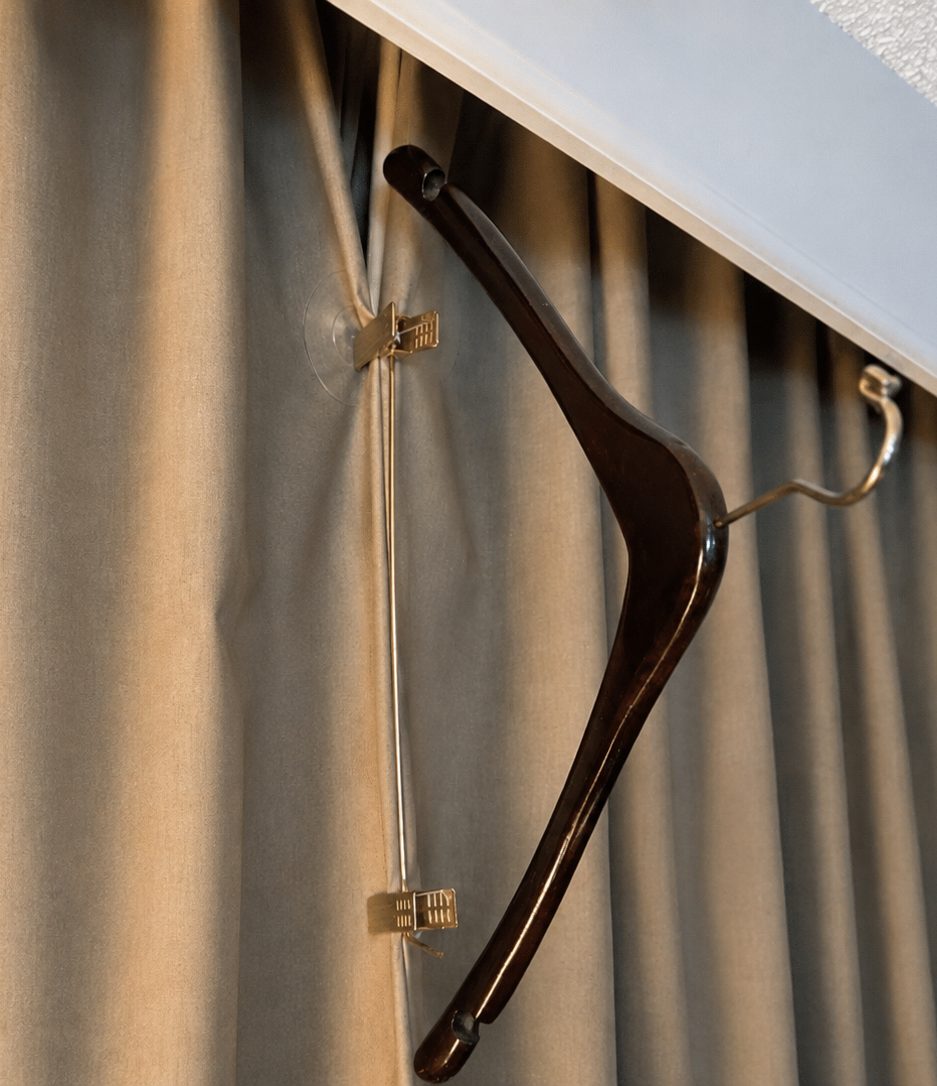
One of the easiest ways to reduce light leaking through hotel curtains is by using a standard clothes hanger together with the clip hangers often found in hotel wardrobes. Simply pull the curtain panels tightly together and use the clips to hold them in place. This helps close the bright gap that commonly appears in the centre of hotel blackout curtains.
Pro Tip: Adding pillows, rolled towels or spare blankets along the bottom and edges of the curtains can improve this method slightly, particularly in bright city hotels where even small gaps let in significant light.
Best for: Travellers wanting a quick, free and portable blackout fix without packing extra equipment
Pros
- Extremely cheap or free
- Very easy to set up, under a minute
- Lightweight and portable
- Works with most curtain styles
Cons
- Only deals with the curtain’s centre gap
- Doesn’t stop light from the sides, top or bottom
- Doesn’t work on blinds
- Dependent on the curtain’s blackout quality
Stick-on blackout
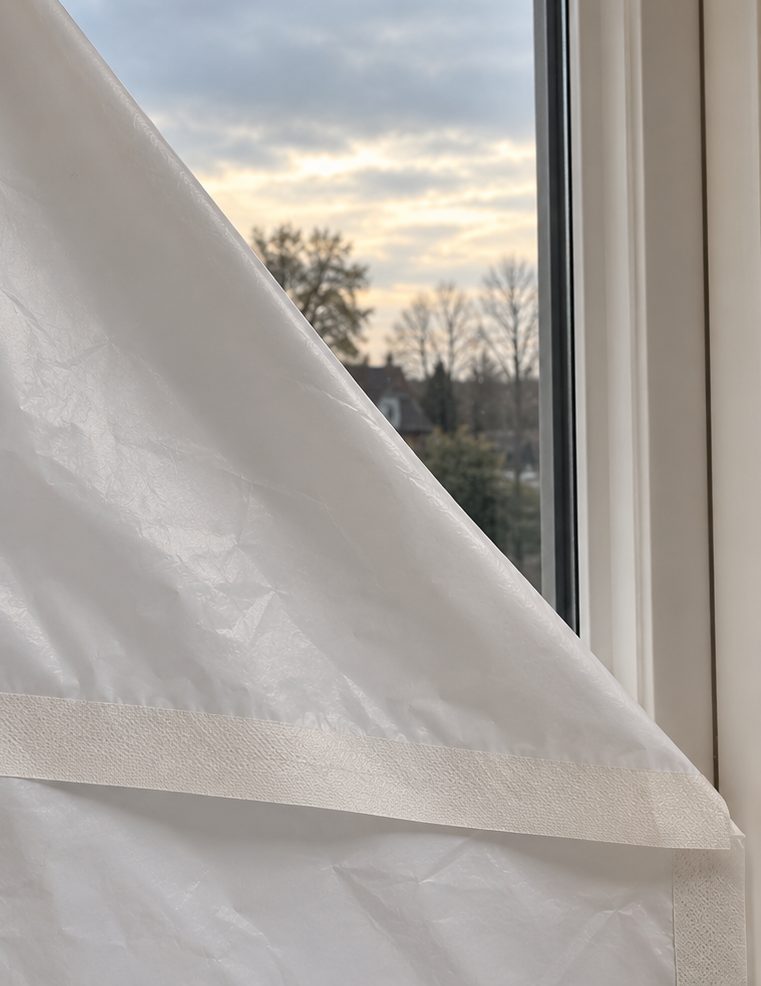
You can either buy a ready-made blackout kit or make your own with some blackout material and double-sided tape or sticky dots (removable nano tape is even better). In a pinch, thick garbage bags or aluminium foil can work surprisingly well too.
Fold or trim the blackout material to fit the window, then tape it securely around the edges, ideally behind the existing curtains. Press firmly to seal out light, then simply remove, fold and reuse it when you leave.
Alternative: Velcro or magnetic strips attached to the blackout material and window frame
Best for: Families setting up a dark hotel room during a multi-day stay
Pros
- Very effective at blocking light
- Fairly inexpensive, source your own materials
- Works on a range of window shapes and sizes
- Reusable across multiple trips
Cons
- Takes time to set up and remove
- Tricky to join multiple sheets together neatly
- Set up time means room will likely be dark during the day
- Not ideal for hard-to-reach windows
Static cling blackout sheets
Blackout static cling sheets are widely available and can be applied directly to a window using a light spray of water. Since the material adheres to the glass itself rather than the window frame, it can create an effective seal that minimises light leakage. However, larger or unusually shaped windows may require multiple sheets or trimming to size, making installation a little more involved.
Pro Tip: Clean window glass to ensure a successful application
Best for: Maximum blackout in hotels with one regular-sized window

Pros
- Seals directly to the glass, reducing light gaps
- Lightweight and portable
- Simple to install on standard windows
- Relatively inexpensive
Cons
- Often peels off and requires reattaching
- Tricky to join multiple sheets together neatly
- Set up time means room will likely be dark during the day
- Not ideal for hard-to-reach windows
Suction cup blackout blinds
Similar to the setup described above, but using suction cups attached to the blackout material to secure it directly to the window. Examples include the Tommee Tippee Sleep Tight Portable Blackout Blind and similar products. These systems are lightweight, portable and very quick to install or remove. However, they typically sit slightly away from the window frame, allowing light to leak around the edges.
A more premium option is the Sleepout Portable Blackout Curtain, which uses high-suction cups to attach velcro anchor points to the window pane. These anchors provide the base for a hook-and-loop (Velcro) system that secures the blackout material. Reviews suggest it provides significantly better light blocking than standard suction-cup blinds. Additional Velcro strips can also be used to seal gaps around the frame, making it something of a hybrid solution.
Best for: Families who want an easy blackout solution and do not require complete darkness

Pros
- Very quick and easy to install and remove
- Lightweight and highly portable
- No risk of damage to walls or window frames
- Works on a range of window shapes and sizes
Cons
- Light often leaks around the top and sides
- Expensive compared to DIY alternatives
- Difficult to join panels together, less suitable for large or irregular windows
- Not ideal for hard-to-reach windows
Blackout sleep tent
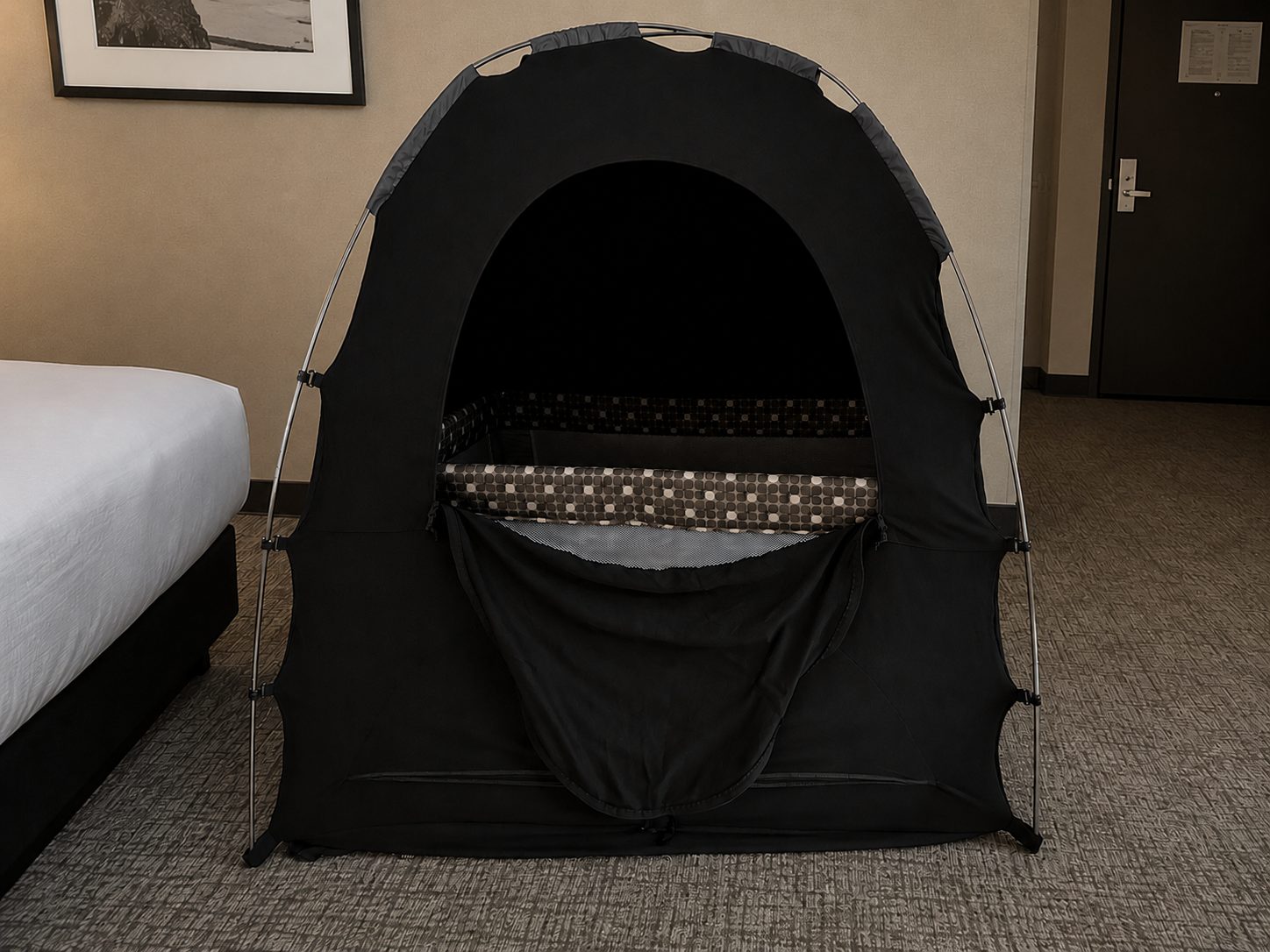
If you’re travelling with a baby or young child who needs daytime naps or an early bedtime, a blackout tent such as the SlumberPod or one of its alternatives can be an effective solution. Designed to fit over a travel cot, pack-and-play or toddler bed, these tents create a darkened sleep space while allowing the rest of the hotel room to remain usable. Most are made from breathable fabric and block a significant amount of light, although they do not provide complete blackout.
Best for: Families sharing a room with a baby or young child
Pros
- Allows parents to use the room while child sleeps
- Compatible with a variety of travel cots and beds
- Creates a cosy, sleep-friendly environment
- No need to consider the size / number of windows
Cons
- Takes a significant time to set up and pack away
- Expensive, quality models can cost around $300
- Bulky compared to other blackout solutions
- Ventilation may be a concern in heat
- Only darkens the sleep space, not the entire room
Final thoughts
Creating a dark sleep environment in a hotel room can make a remarkable difference on a family trip. There’s no one-size-fits-all solution, as it really comes down to how much light you need to block, how much effort you’re willing to put in and what you want to pack.
For a quick fix, the coat-hanger hack is surprisingly effective. If you want more complete blackout, static cling or a dedicated blackout covering is a better option. And if you’re travelling with a baby or young child, a blackout sleep tent can be particularly useful.
A little preparation before a trip can mean better naps, later wake-ups and a much happier start to the day, which, when you’re travelling with kids, is definitely worth the effort. For more things worth packing, see our hotel room essentials for families.
More Family Travel Essentials
This post contains affiliate links. If you buy through them, as an Amazon Associate we earn from qualifying purchases, at no extra cost to you.